Choosing an Accountant for a Small Business in Ireland
How to choose an accountant for small business in Ireland: what they do, bookkeeper vs accountant, what affects fees and the questions to ask first.
- Author
- Abbey Blue Formations
- Published
- Reading time
- 6 min read
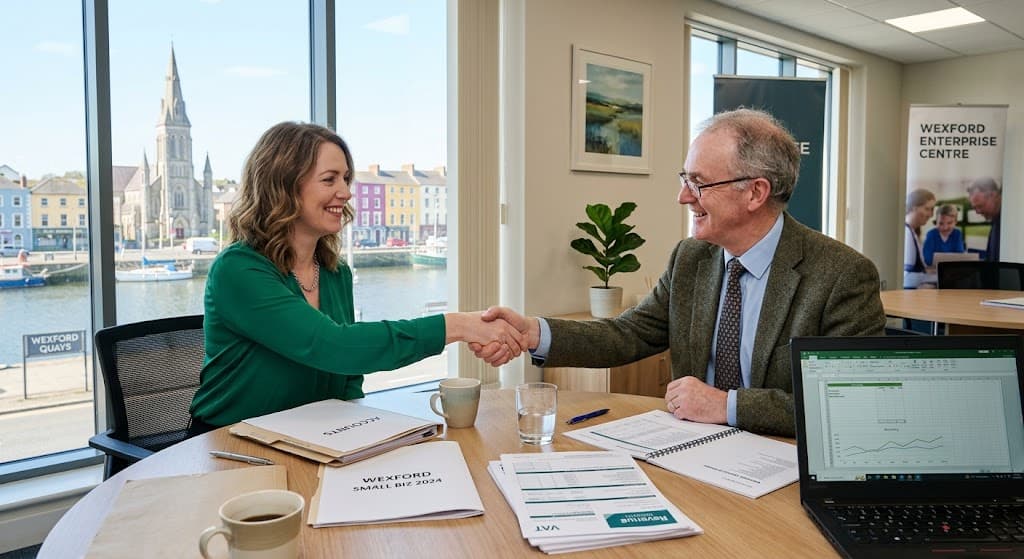
Finding the right accountant for small business needs is one of the most useful decisions you will make as a company director. A good one keeps you compliant, spots problems early and helps you pay yourself tax-efficiently. A poor fit leaves you chasing deadlines and paying for work you do not understand.
This guide explains what an accountant Ireland small companies hire actually does, how a bookkeeper differs from an accountant, what drives the fee and the questions to ask before you sign an engagement letter.
What does a small business accountant do?
For a small Irish limited company, the core work usually includes:
- Year-end financial statements prepared under the Companies Act 2014 and filed with your CRO annual return.
- Corporation Tax return (CT1) and preliminary tax calculations.
- Directors' personal tax returns, where the directors need to file one.
- VAT returns and the annual Return of Trading Details, if you are VAT-registered.
- Payroll and real-time reporting to Revenue under PAYE Modernisation.
- Advice on salary vs dividends, reliefs, expenses and growth plans.
A small business accountant often acts as your tax agent. You do not have to use a tax agent, but if you do, they will access your Revenue Online Service (ROS) account and file returns on your behalf. The agent notifies Revenue using their Tax Advisor Identification Number (TAIN).
Deadlines stack up quickly in the first year. Our CT1 Corporation Tax deadline calendar and guide to the annual return (B1) show what falls due and when.
Bookkeeper vs accountant: what is the difference?
The roles overlap, but they are not the same.
A bookkeeper
- records sales, purchases and payments
- reconciles bank accounts
- manages invoices and supplier bills
- prepares VAT figures and often runs payroll
An accountant
- turns the books into year-end financial statements
- prepares tax returns and tax planning
- advises on structure, reliefs and compliance
- reviews the bookkeeping for errors
Many small companies need both, and the best results come when they work together. That is why many firms now bundle bookkeeping services Ireland companies can use online with year-end accounts. Clean monthly bookkeeping makes year-end faster and cheaper, because the accountant is not reconstructing a year of transactions from bank statements.
If you want to do some of the bookkeeping yourself, our comparison of DIY bookkeeping vs outsourcing helps you decide where to draw the line.
Do you need an auditor?
An accountant and an auditor are not the same thing. Only a statutory auditor registered with a recognised body can carry out a company audit, and the CRO keeps a searchable list of registered auditors.
Many small private companies qualify for audit exemption, but it can be lost. For example, a company cannot use audit exemption if it files its annual return late more than once within five years. Our guide to the audit exemption and how to keep it explains the conditions.
What affects accountancy fees
Fees vary widely, so compare what is included rather than the headline price. The main drivers are:
- Transaction volume: more invoices and bank lines mean more work.
- Quality of your records: tidy, reconciled books cost less to finalise.
- VAT and payroll: each adds recurring filings through the year.
- Complexity: stock, foreign currency, grants or multiple companies add time.
- Advice and availability: a fixed monthly fee that includes calls and emails can work out better value than hourly billing.
Ask for a written quote that lists exactly which returns are included and what triggers an extra charge.
Questions to ask an accountant for small business work
Are you a member of a professional accountancy body? Examples include Chartered Accountants Ireland and ACCA. Membership means professional standards and continuing education.
Do you work with companies like mine? Sector experience saves time and uncovers reliefs.
Which software do you use? Using the same platform avoids duplicated work.
What exactly is included in the fee? Year-end, CT1, directors' returns, VAT, payroll, B1?
Who will I deal with day to day? A named contact matters more than a big brand.
How do you handle deadlines? Ask how they remind you and what they need from you, and by when.
Do you offer company secretarial support? Keeping CRO filings, registers and minutes with the same provider reduces gaps. Our company secretary service covers this.
Frequently Asked Questions
Do I legally need an accountant for my small business in Ireland?
No. There is no legal requirement to hire an accountant for small business work or to use a tax agent. However, a limited company must file financial statements with its annual return and a Corporation Tax return each year, and directors must keep adequate accounting records. Most owners find professional help is cost-effective.
Is a bookkeeper enough, or do I need an accountant too?
For a sole trader with simple affairs, a bookkeeper plus a tax return service may be enough. A limited company usually needs both: a bookkeeper to keep the records up to date and an accountant to prepare year-end financial statements and tax returns. Some firms offer both under one package.
How do I switch accountant in Ireland?
Tell your current accountant in writing and ask for your records, the latest financial statements and working papers. Your new accountant Ireland firm will then link to your ROS account as agent. Plan the switch well ahead of a filing deadline so nothing is missed in the handover.
What should bookkeeping services in Ireland include?
Good bookkeeping services Ireland providers should cover recording sales and purchases, bank reconciliation, VAT figures and returns, payroll where needed and regular reports on how the business is doing. Ask how often they update the books and how you share receipts and invoices.
Can a small business accountant work fully online?
Yes. With cloud accounting software, bank feeds and ROS agent access, a small business accountant can handle your books, VAT and year-end without in-person meetings. Make sure you still have a named contact and a clear process for sending documents.
Get bookkeeping and accounting support in one place
Our fully online bookkeeping and accounting packages cover your records, VAT and year-end so you can focus on the business. Starting a new company? Click here to use our free Formation Calculator for an instant, transparent price.