Form 11 for Company Directors: Who Must File, Deadlines and What Goes on It
Own over 15% of your company? You must file a Form 11. What goes on it, the ROS pay-and-file deadline, and how good bookkeeping makes it easy to complete.
- Author
- Abbey Blue Formations
- Published
- Reading time
- 6 min read
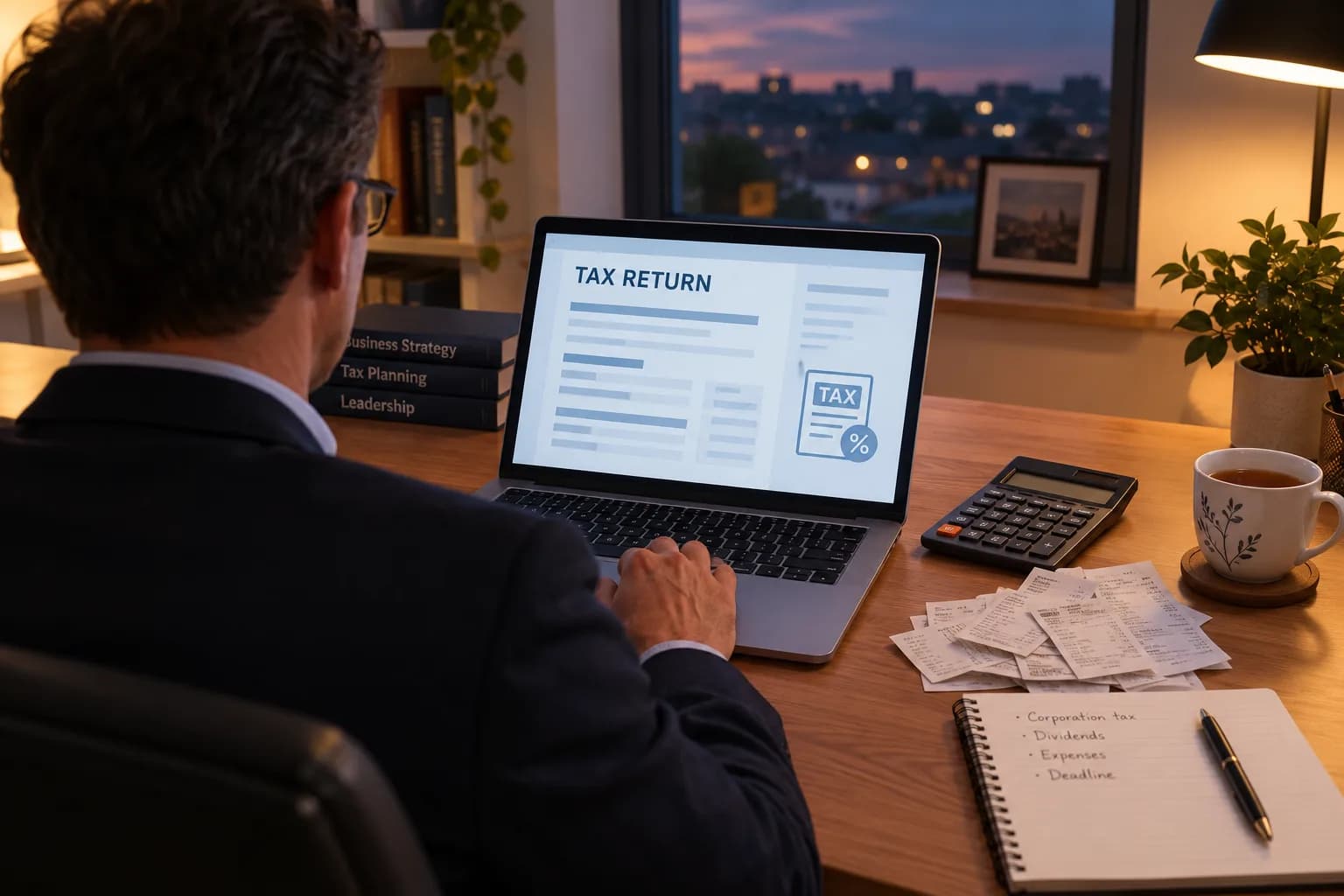
Many new company owners assume PAYE takes care of their tax once they are on the payroll. For most directors who own a meaningful share of their company, it does not. You also need to file a form 11 every year, even if your salary is the only income you have.
This guide is for company directors, not sole traders. It covers who must file, deadlines and penalties, what goes on the return, and how your company's books feed into it.
What is a Form 11?
If you are wondering what is a form 11 revenue uses, it is the self-assessment income tax return. You report your income for the previous tax year, calculate the tax due, and pay any balance along with preliminary tax for the current year.
It is different from Form 12, a simpler return for PAYE employees with little other income. Most directors file the form 11 revenue expects through the Revenue Online Service (ROS), and certain taxpayers are required to file electronically.
Why proprietary directors must file a Form 11
A proprietary director is a director who owns or controls, directly or indirectly, more than 15% of the company's ordinary share capital. Shares held by connected persons, such as a spouse, can count towards that figure.
Revenue treats proprietary directors as chargeable persons. That means you must file a form 11 regardless of whether you have any other income. A founder who owns 100% of a one-person company and takes only a salary still has to file.
Non-proprietary directors
Directors with 15% or less are non-proprietary directors. Revenue treats company directors generally as chargeable persons, so check your own position before assuming you are exempt. For PAYE taxpayers in general, self-assessment applies once net non-PAYE income is €5,000 or more, or gross non-PAYE income is €30,000 or more.
The dormant-company exception
There is a narrow exception for directors of companies with almost no activity. For the three years ending on 31 December of the tax year, the company must not have carried on any trade, business or investment activity, must have held no assets other than cash of €130 or less, and must not have paid any charges on income.
Form 11 deadlines and the ROS extension
31 October vs the mid-November ROS date
The standard form 11 deadline is 31 October. By that date you file last year's return, pay any balance due for last year, and pay preliminary tax for the current year.
If you both file and pay through ROS, you get a later date set by Revenue each year (18 November 2026 for 2025 returns). The extension only applies if you complete the self-assessment panel on the return and pay on ROS. File online but pay by another route, and the 31 October date applies.
Surcharges and interest
Late filing triggers a surcharge on your tax due:
- 5%, up to €12,695, if you file within two months of the deadline.
- 10%, up to €63,485, if you file more than two months late.
A separate 10% surcharge can apply if your Local Property Tax is not up to date. Late payment also attracts interest at 0.0219% per day.
What goes on a director's Form 11
A ros form 11 pulls in much of your PAYE information automatically, but you still need to check it and add everything else. A typical director's return includes:
- Salary from your company, which should match your payroll records.
- Dividends paid by the company.
- Benefits in kind, such as a company car or health insurance.
- Other income, such as rental income, foreign income or deposit interest.
- Pension contributions and any reliefs or credits you are claiming.
- Preliminary tax for the current year, based on 90% of this year's tax, 100% of last year's tax, or 105% of the year before last if you pay by direct debit.
How you split salary and dividends shapes this return. Our guide to paying yourself from a limited company covers that choice. If you have not yet registered with Revenue as a director, read about PPSN requirements for directors.
How your company's bookkeeping feeds your Form 11
Your personal return depends on figures from your company. Before you file, gather:
- Payroll summary for the year, showing salary, tax, USC and PRSI.
- Dividend records, including board minutes and dividend vouchers.
- Director's loan account balance, since money taken out and not repaid can have tax consequences.
- Benefit-in-kind records, showing what the company provided and its value.
Our CT1 deadline calendar shows how the company's own return fits in. Keeping proper books of account is also a legal duty for the company, as our guide to directors' duties explains.
Filing step by step on ROS
- 1Register for ROS as an individual, if you have not already.
- 2Open the Form 11 for the relevant tax year.
- 3Check the pre-populated data, especially salary and tax paid through payroll.
- 4Add other income, such as dividends, benefits and rental income.
- 5Claim your credits and reliefs.
- 6Complete the self-assessment panel and calculate your liability.
- 7Pay on ROS, including preliminary tax.
- 8Keep your records for six years.
Frequently Asked Questions
What is a Form 11 from Revenue?
If you are asking what is a form 11 revenue wants from you, it is the income tax return used by self-assessed taxpayers. You report last year's income, calculate the tax due and pay any balance, along with preliminary tax for the current year. Directors and the self-employed use it, and most file the form 11 revenue provides online through ROS.
Who needs to file a Form 11?
Self-employed people, proprietary directors, and PAYE taxpayers whose non-PAYE income reaches €5,000 net or €30,000 gross must file. A proprietary director owns or controls more than 15% of the company's ordinary share capital and has to file every year, whatever their other income.
Do company directors have to file a Form 11 if they only take a salary?
Yes, if you are a proprietary director. Revenue treats you as a chargeable person even if all your income is salary taxed through payroll. The only exception is a director of a company that has been effectively dormant for three years, with no trade and no more than €130 in cash.
How do I complete Form 11 online on ROS?
Log in to ROS, open the ros form 11 for the tax year, and check the pre-populated payroll data. Add dividends, benefits and other income, claim your credits, and complete the self-assessment panel. Pay through ROS as well, as that is a condition of the later mid-November date.
What is the difference between Form 11 and Form 12?
Form 12 is for PAYE employees with small amounts of other income who are not chargeable persons. Form 11 is the full self-assessment return for the self-employed, proprietary directors and people above the non-PAYE thresholds. Form 11 also includes preliminary tax and has a firm form 11 deadline with surcharges for late filing.
Keep your director records ready all year
A form 11 is much easier when your company's payroll, dividends and director's loan account are up to date. Our bookkeeping packages keep your company's records in order so your personal return is straightforward. Starting a new company? Click here to price your company in minutes.