Remote Working Relief in Ireland: The Daily Allowance vs Claiming the Relief
Working from home? Compare the tax-free daily e-working allowance your company can pay with remote working relief, with worked examples for directors.
- Author
- Abbey Blue Formations
- Published
- Reading time
- 6 min read
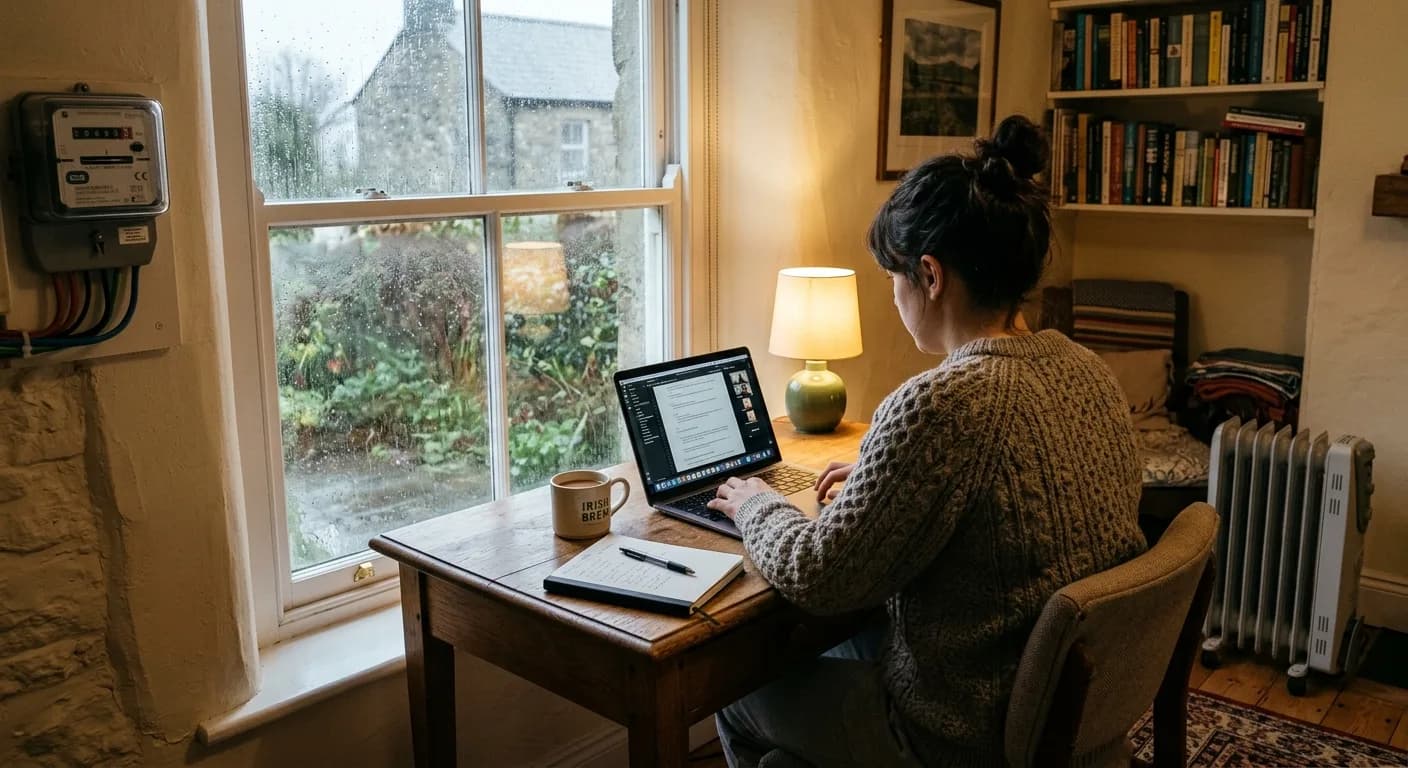
If you or your staff work from home, Revenue offers two ways to cover the extra heating, electricity and broadband. Your company can pay a tax-free daily allowance, or the worker can claim remote working relief on their own tax.
This guide is for business owners, so it looks at both sides of the desk. It covers when the company should pay the working from home allowance, how to report it, and when claiming the relief works out better.
What is remote working relief?
Remote working relief is a tax relief on part of the household costs you take on by working from home. Revenue calls these workers e-workers or remote workers.
To qualify, you must be required to work from home for substantial periods. Bringing work home in the evening or at weekends by choice doesn't count. Neither do capital items you buy yourself, such as a laptop, desk or chair. The relief covers running costs only: electricity, heating and broadband.
Option 1: the tax-free daily allowance your company pays
An employer can pay a remote worker up to €3.20 per day without deducting income tax, PRSI or USC. Anything above €3.20 a day is taxed as normal pay. This e workers allowance is optional. Revenue allows it, but no employer has to pay it.
If your company pays it, there are two rules to follow:
- Report it. The remote working daily allowance is one of the payments covered by Enhanced Reporting Requirements. You report the number of days, the amount and the date paid, on or before the date you pay it.
- Keep records. Hold a record of who was paid, for which days, and on what basis, in case Revenue reviews it later.
In your books, record the allowance as a staff expense, separate from salary, so it doesn't end up on the payroll as taxable pay. Our guide to keeping proper books of account explains how to set up expense categories.
Option 2: claiming remote working relief from Revenue
If the employer pays nothing, or less than the worker's allowable costs, the worker can claim working from home tax relief Ireland offers through Revenue instead. You can claim 30% of your electricity, heating and broadband bills, apportioned by the number of days you worked from home during the year. The relief is given at your highest rate of tax.
How to calculate it
Revenue's formula is: (bill total × days worked from home ÷ 365, minus any employer allowance) × 30%.
Take someone with €1,890 of utility bills who worked from home on 50 days:
- €1,890 × 50 ÷ 365 = €258.90
- €258.90 × 30% = €77.67 of allowable costs
- At the 40% rate, the tax relief is €31.07
Shared bills can be split between the people who paid them. For broadband in a bundle, you can claim 30% of the broadband portion.
Can you get both?
Not in full, and this is the key point in how to claim working from home allowance and relief together. Any allowance your employer paid is deducted before the 30% is applied, so if it already covers your costs, there is nothing left to claim.
Remote working relief for company directors
Directors, including proprietary directors, can claim working from home tax relief on remote working costs they paid out of their director's salary. They follow the same 30% formula.
Most owner-directors file an Income Tax Return, so the claim goes on the return at year end. You can upload your bills to the Receipts Tracker in ROS to support the claim. Our guide to paying yourself from a limited company covers salary, dividends and expenses together.
Revenue's guidance on the daily allowance refers to "employees". If you want your company to pay the allowance to you as a director, put the arrangement in writing, report it under ERR, and confirm the treatment with your accountant first. This is a common question for people running a contractor limited company from a home office.
Allowance vs relief: which is better?
Take a worker who is at home 200 days a year and has €2,000 of electricity, heating and broadband bills.
| Allowance | Relief at 20% | Relief at 40% | |
|---|---|---|---|
| Calculation | 200 × €3.20 | €2,000 × 200 ÷ 365 × 30% = €328.77 | Same: €328.77 |
| Tax-free benefit | €640 | €65.75 | €131.51 |
For most people the daily allowance is worth far more, because it is paid in full and tax-free. The relief only gives back tax on 30% of the apportioned bills. If you control the company, paying the allowance properly is usually the better route.
Equipment, BIK and record-keeping
If your company gives a remote worker a computer, laptop or office furniture, it is not a benefit-in-kind as long as private use is minimal.
Working from home also has no effect on your home's Principal Private Residence Relief for capital gains tax. You won't get a reduction in Local Property Tax for using a room as an office.
Keep your utility bills. If you don't upload them to Revenue, you need to hold the originals for six years.
Frequently Asked Questions
How do I claim tax back for working from home?
Employees claim working from home tax relief through myAccount. You can claim for the current year in real time by uploading your bills to the Receipts Tracker. For earlier years, use "Review your tax for the previous 4 years" and complete an Income Tax Return. Directors and self-assessed taxpayers claim on their Income Tax Return.
What is the working from home allowance in Ireland?
It is a payment of up to €3.20 per day that an employer can pay a remote worker without deducting income tax, PRSI or USC. Anything above €3.20 a day is taxed. The employer must report each working from home allowance payment to Revenue under Enhanced Reporting Requirements, on or before the payment date.
Can I claim both the €3.20 allowance and remote working relief?
Only partly. Your employer's allowance is deducted from your apportioned costs before the 30% is applied. Where the employer pays less than your costs, you can claim relief on the difference. Knowing how to claim working from home allowance and relief together avoids a rejected claim.
Can company directors claim remote working relief?
Yes. The rules on working from home tax relief Ireland apply to directors too, including proprietary directors, for remote working costs paid out of their director's pay. They use the same 30% formula. Most directors claim on their annual Income Tax Return. If the company pays you the daily allowance, report it under ERR and keep records.
Can I backdate a remote working relief claim?
Yes, within Revenue's four-year limit: you can claim for any of the last four tax years. Use the "Review your tax for the previous 4 years" option in myAccount, or include the claim on your Income Tax Return for the year in question, and keep your bills as evidence.
Let us handle the reporting
Allowances only stay tax-free if they are reported and recorded correctly. Our bookkeeping packages cover payroll reporting, ERR submissions and expense records, so your e workers allowance payments and remote working relief claims are backed up. If you're weighing it up, read DIY bookkeeping vs outsourcing. Starting a company? Click here to price your company formation.